




Liquidity Mining Explained: Uncover the Potential of DeFi
In a world where decentralized finance (DeFi) is reshaping the financial landscape, liquidity mining has emerged as a pivotal concept for both investors and platforms alike. As of 2024, the DeFi sector has attracted billions, with over $10 billion locked in various liquidity pools, according to DeFi Pulse. This rapid growth prompts an essential question for many: How do you tap into this potential? In this guide, we will break down liquidity mining, explore its benefits, and detail how it operates within the larger DeFi ecosystem.
What is Liquidity Mining?
At its core,
ong>How it Works: ong> Users deposit tokens into a liquidity pool. In return, they earn rewards, typically in the form of the platform’s native tokens.ong>Decentralization: ong> Unlike traditional investment methods, liquidity mining operates on a decentralized network, reducing reliance on intermediaries.ong>Yield Farming: ong> Many liquidity miners participate in yield farming, where they move assets between platforms to optimize returns.
The Mechanics Behind Liquidity Pools
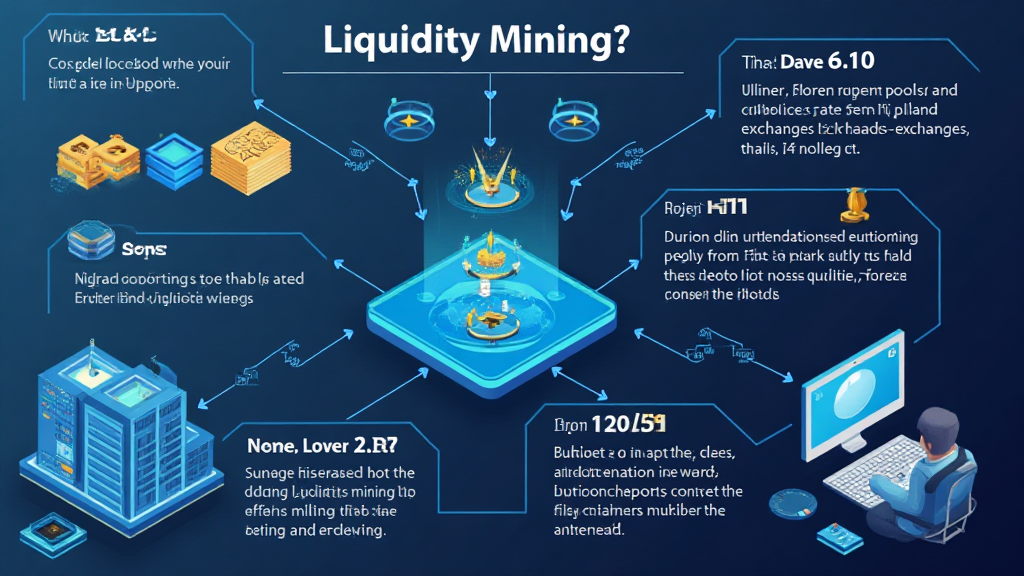
Liquidity pools consist of funds locked in a smart contract. These pools allow users to trade assets without waiting for buyers and sellers to match. This bypassing of order books accelerates transactions, making it crucial for the DeFi ecosystem.
Understanding Automated Market Makers (AMMs)
AMMs are the underlying technology that enables DEXs to function without traditional order books. Here’s a simplified analogy: if you’ve ever bought or traded physical assets, you understand that a seller and buyer must agree on a price. In contrast, AMMs set prices algorithmically based on supply and demand.
For instance, if you want to swap Ethereum (ETH) for Bitcoin (BTC), the AMM calculates the price based on the current reserve levels in the liquidity pool. This innovation has not only enhanced trading speed but also increased liquidity available on DEXs.
Benefits of Liquidity Mining
ong>High Returns: ong> Liquidity miners can earn significant yields, often surpassing traditional savings rates in traditional finance.ong>Diversification: ong> Users can provide liquidity to multiple asset pairs, spreading risk.ong>Community Governance: ong> Many platforms distribute governance tokens to liquidity providers, allowing them to vote on important decisions.
Risks Involved in Liquidity Mining
While liquidity mining presents exciting opportunities, it is essential to weigh the risks involved:
ong>Impermanent Loss: ong> When the price of tokens in a liquidity pool diverges significantly, liquidity providers may experience losses compared to simply holding the tokens in a wallet.ong>Smart Contract Vulnerabilities: ong> Errors in code can be exploited, leading to potential losses for liquidity providers.ong>Market Volatility: ong> The crypto market is notoriously volatile, and liquidity mining returns can fluctuate widely.
Liquidity Mining in the Vietnamese Market
The Vietnamese crypto market is seeing rapid growth, with a staggering increase of 74% in user adoption year-on-year. Local platforms are discovering innovative ways to engage users through liquidity mining strategies. This surge presents opportunities for both seasoned investors and newcomers alike.
For Vietnamese investors, understanding liquidity mining is essential, especially as interest in DeFi projects rises. As of 2024, Vietnam hosts a vibrant community of crypto enthusiasts, and platforms like Hibt.com offer comprehensive guides on how to navigate these waters.
How to Get Started with Liquidity Mining
If you’re considering joining the liquidity mining landscape, here’s a step-by-step approach:
ong>Choose a Platform: ong> Select a reputable DEX that offers appealing liquidity mining rewards.ong>Connect Your Wallet: ong> Use a digital wallet that supports the DEX’s ecosystem.ong>Deposit Assets: ong> Enter the amount you wish to provide to the liquidity pool.ong>Monitor Performance: ong> Keep an eye on rewards and market conditions.
For more insights on related topics, you may wish to read our article on 2025’s promising altcoins.
The Future of Liquidity Mining
The future of liquidity mining appears bright, with innovative projects emerging continuously. As DeFi grows, more users will seek to optimize their investment strategies through liquidity mining. However, being informed and understanding the associated risks will be crucial.
According to industry predictions, liquidity mining could see exponential growth, especially in Asia. Regulatory clarity will play a pivotal role in shaping the future landscape, ensuring both security and trust for users.
Conclusion
In summary, liquidity mining presents an attractive opportunity for those venturing into the DeFi space. By providing liquidity to decentralized exchanges, users can earn substantial rewards while contributing to the ecosystem’s efficiency. As the Vietnamese crypto market continues to expand, understanding key concepts like liquidity mining will empower you to make informed investment decisions.
With the right approach, liquidity mining could become a cornerstone of your crypto investment strategy!
Author: Dr. James Lee, a renowned blockchain researcher with over 50 published papers in cryptocurrency security and a key figure in auditing major DeFi projects.


